 ChatGPT
 Claude
 Gemini
 Grok
OpenAI has just made a practical change for businesses: a company can claim and verify its organization in ChatGPT, update key details, and see some aggregated engagement data. That creates a new way to correct business information at the point where customers are researching options.
But there is a trap in the announcement. A verified profile is not a promise that ChatGPT will recommend you more often. It gives the company a direct way to manage certain facts and observe some activity. ChatGPT still creates answers independently, and visibility can change with the question, location, sources, and product category.
The useful question is not whether you should rush to claim a profile. It is whether your business information is accurate, whether customers can find the right details, and whether you can tell if your presence in AI answers is improving.
What OpenAI announced for businesses
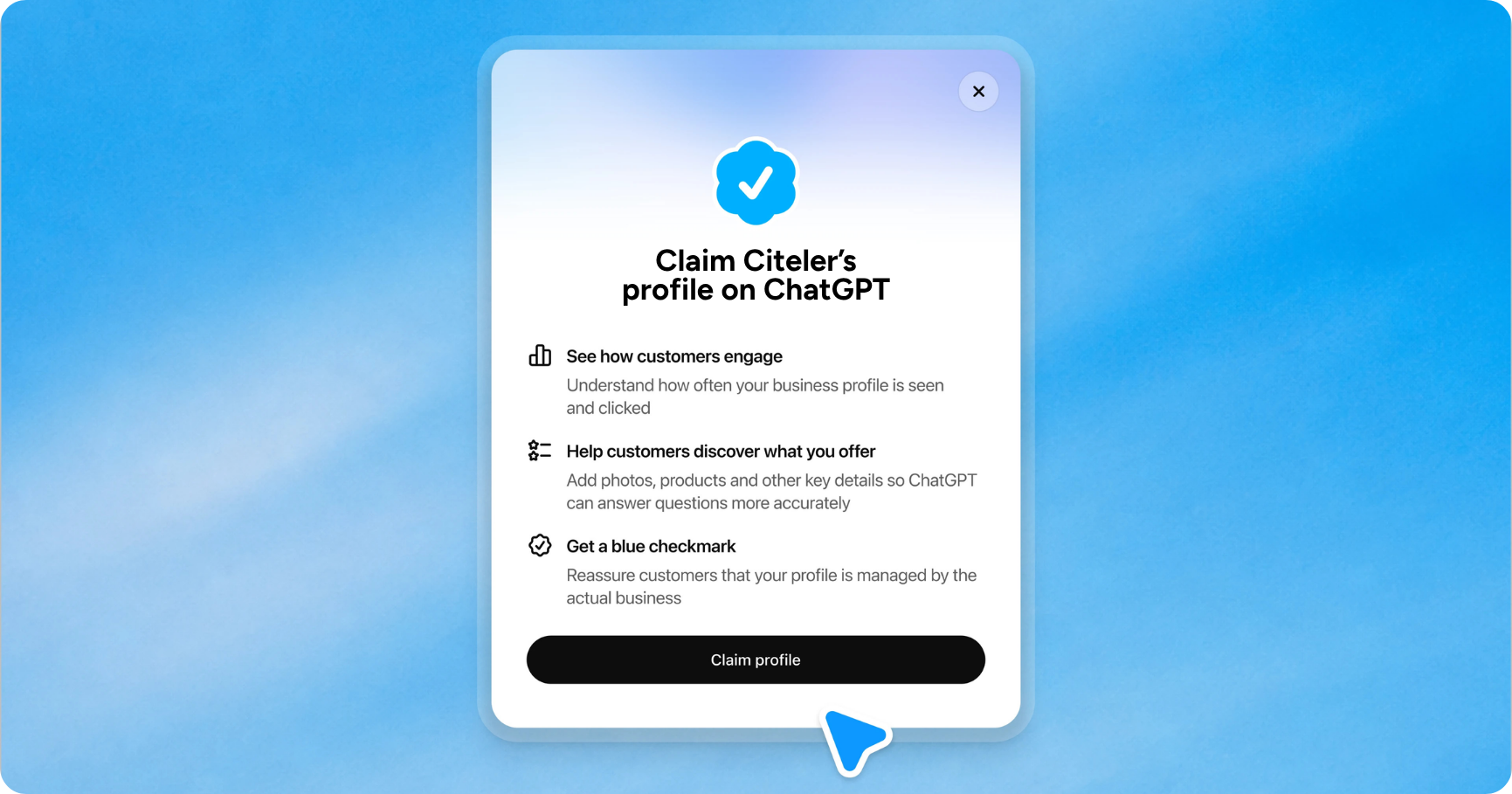
OpenAI introduced Businesses in ChatGPT as a beta on November 10, 2026. In Business Hub, eligible companies can claim an organization, complete verification, update key details, and, for relevant businesses, add product feeds with pricing and availability. Shopify merchants can connect through Business Hub or Shopify admin. The full announcement is in OpenAI’s Businesses in ChatGPT update.
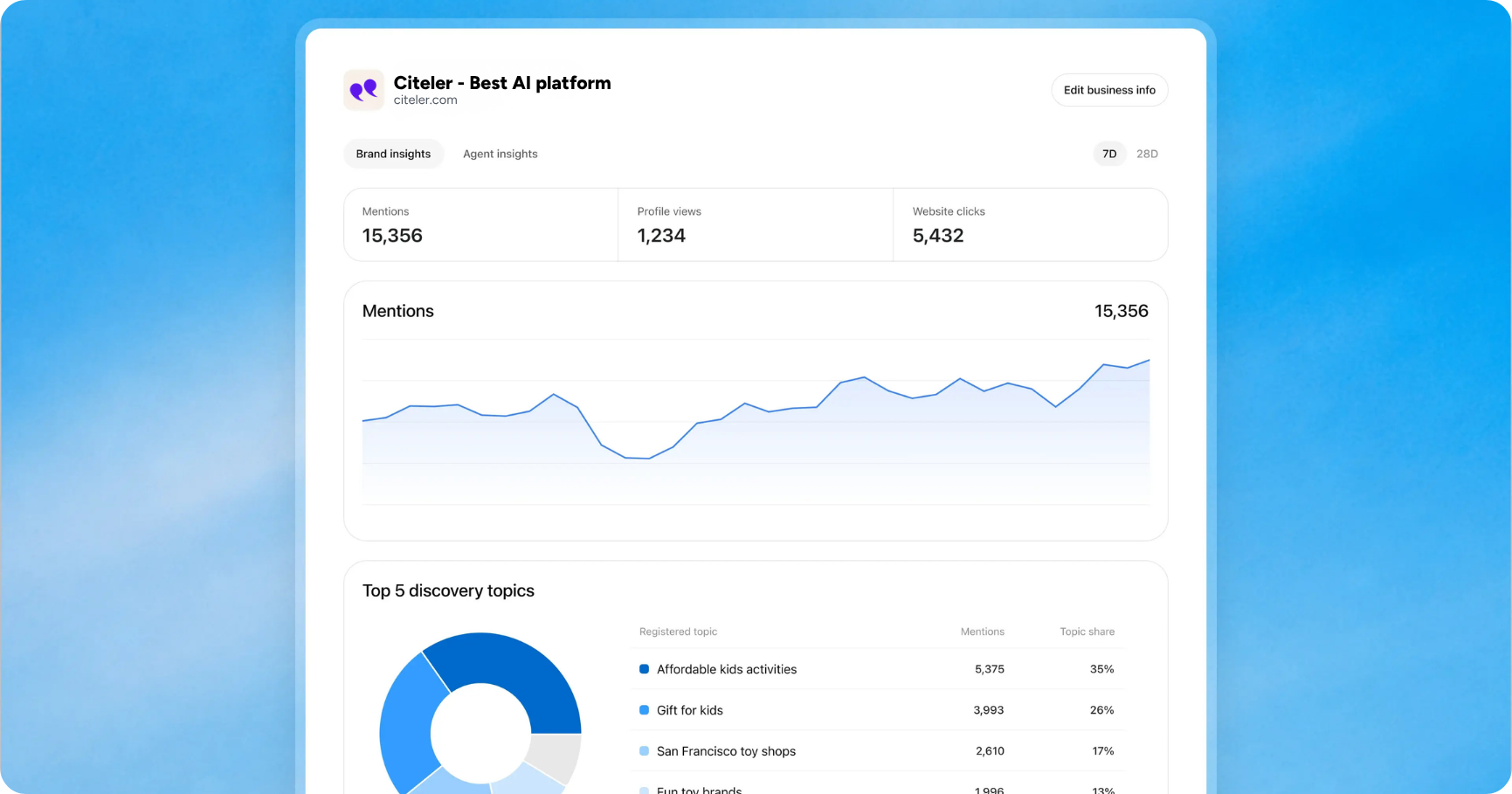
The rollout has a few different parts. A claimed business may receive an in-product profile that people can open when the business appears in an answer. Business Hub also offers aggregated counts of mentions and website clicks, plus discovery topics that describe common themes in conversations where the company website is cited. These insights only appear when interaction volumes meet privacy thresholds. They do not expose individual conversations.
OpenAI says businesses in locations where ChatGPT is available can claim their organization if eligible. Existing OpenAI Enterprise customers and advertisers can work through their representatives. Shopify merchants have a separate connection path. Business Agents are a different feature, initially available to eligible ecommerce and online service businesses in the United States. Do not assume that every business can launch an agent just because it can claim a profile.
Read next: 12 Best AI Search Visibility Tools for SaaS Teams in 2026
What a verified profile can and cannot do
The strongest immediate value is accuracy. If your official business name, location, service details, or product availability are wrong or missing, a verified channel can help you provide current information. That matters when an answer describes your offer or a customer compares you with alternatives.
A profile is not a ranking switch. OpenAI has not said that claiming a business increases its likelihood of being named, cited, or placed first. A customer may see a profile after the business appears in a model response. That is a useful step after discovery, but it does not establish that the profile caused the appearance.
This distinction is easy to blur because several outcomes sit close together. A business can be named without a website link. Its website can be cited without the brand being recommended. A profile can be accurate while the business is absent from answers to the questions buyers ask. Track those outcomes separately.
Signal | What it tells you | What it does not prove |
Verified profile | Your submitted business details have passed the platform verification flow. | That ChatGPT will mention or recommend the company more often. |
Brand mention | The business name appeared in a tested answer. | That the answer cited your website or sent a customer. |
Website citation | A page from your site supported or accompanied an answer. | That the page caused the recommendation or produced a sale. |
Website click | A person clicked through from a ChatGPT experience. | That all influence from AI discovery is captured in click data. |
For a broader view of how models mention, compare, and cite brands, see Citeler’s AI model visibility overview. It explains why one platform’s result is not a reliable stand-in for every other platform.
How to claim your business without treating it as a shortcut
Start with the facts customers actually use to decide. Check the official name, locations, service area, contact details, current offerings, prices where appropriate, and availability. Make sure those facts match your own website and important public listings. A profile that is verified but incomplete can still leave buyers with unanswered questions.
If you sell products, treat a feed as a data-quality task. Confirm that product names, variants, prices, stock status, images, and landing pages agree. A feed can make details easier to provide, but it does not guarantee that a product will appear for a given query. OpenAI’s announcement describes the feed as a way to share accurate, current product information, not a paid placement.
For every business, make the main website pages equally clear. Google’s current guidance says its AI Overviews and AI Mode use the same core SEO foundations, require pages to be indexed and eligible for a snippet, and do not require special AI files or markup. The Google Search Central guide to AI features is a useful reminder that a new ChatGPT profile does not replace a crawlable, helpful website.
Then test the work with real buyer questions. Ask how someone might compare providers, describe a problem, ask for options in a location, or check whether a particular service fits. ChatGPT Search can return current answers with linked sources, but its search help documentation also cautions that results and citations can be incomplete, outdated, or incorrect. A one-time answer is evidence to investigate, not a verdict.
Use this short sequence after claiming the profile:
Record the exact business facts you submitted and the date they were verified.
Choose a small set of non-branded buyer questions that match your main products, services, and markets.
Run those questions in ChatGPT and at least one other AI search experience, noting mentions, citations, competitors, and factual errors separately.
Repeat the same questions after meaningful changes, and compare the answers over time instead of reacting to one result.
Check whether the profile insights show aggregate mentions, website clicks, or cited discovery topics, then compare those signals with your own analytics and enquiries.
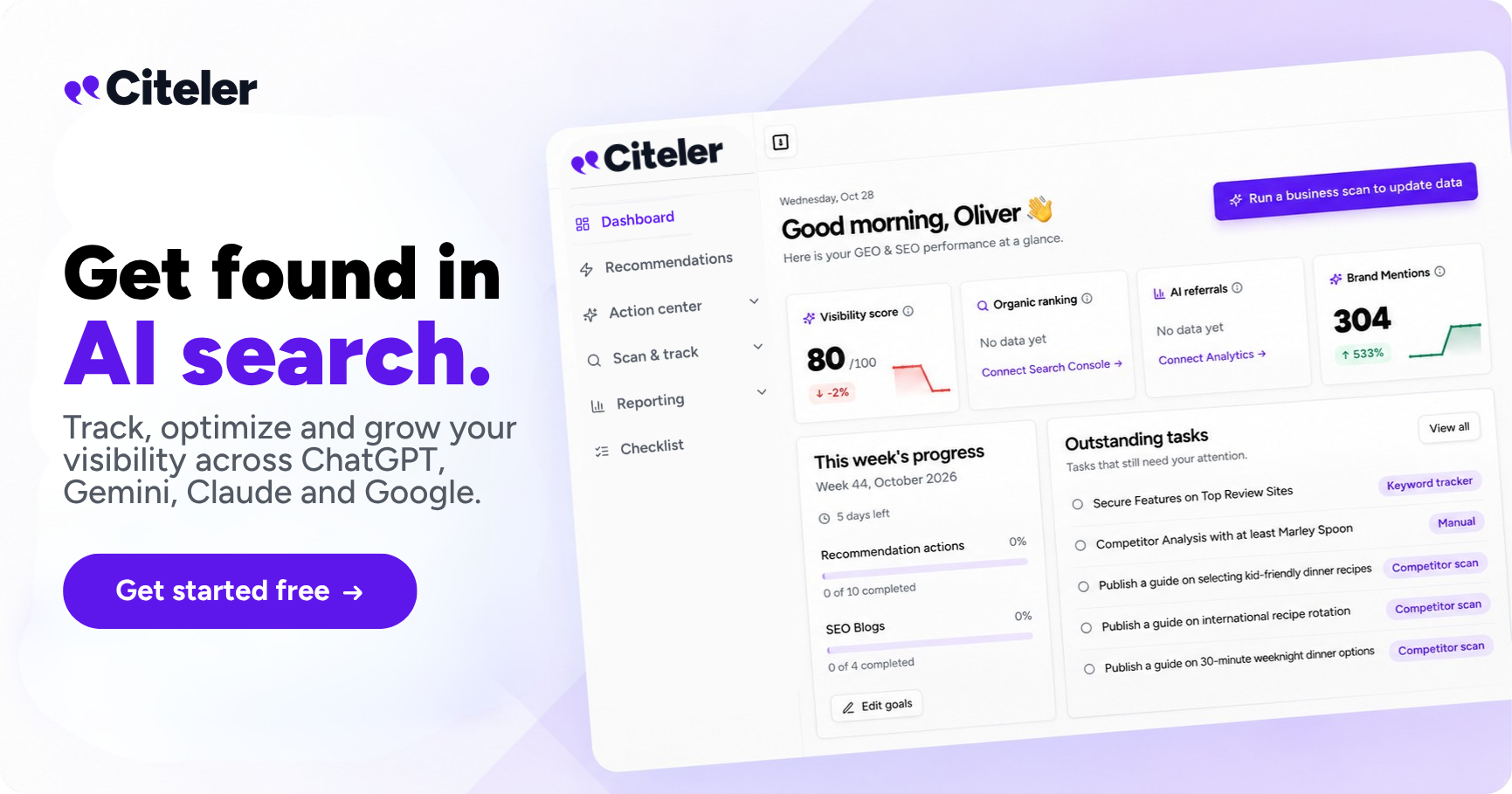
This is where teams often waste time: they claim the profile, see no immediate lift, then declare the change useless or start rewriting every page. Neither reaction is supported by a short observation window. Establish a baseline first, change a few high-value facts or pages, and keep the questions consistent. Citeler’s weekly AI visibility tracking guide offers a repeatable way to compare answers and turn patterns into work.
What to measure after claiming
A useful review should answer three different business questions. Is the company represented accurately? Does it appear for relevant non-branded questions? Do those appearances lead to visits or enquiries? Profile analytics can help with the last question, but an attributed website click is only one path. Some buyers may search the brand later, visit through another channel, or never click a cited result.
Keep a simple before-and-after record. Note the date, exact prompts, market, platform, whether the brand was named, whether its website was cited, what competitors appeared, and any resulting site visits or leads you can reasonably connect. Compare like with like. A question tested in one city is not a fair comparison with a broad national query.
Related blog: How to make your website AI ready?
Do not use a single visibility score as a substitute for evidence. Scores can help teams spot changes, but they simplify answers that vary across models and questions. Read a sample of the actual responses. Check whether the cited page supports the claim and whether the answer describes the service correctly. That makes the next action clearer than simply chasing a higher number.
A practical next step for your business
Claiming is worth investigating if your organization is eligible, especially if its public details need correction or your product catalog changes often. Treat it as one part of your discovery information, alongside the website and the sources buyers already trust. For many companies, the best first move remains fixing confusing service pages, thin product details, outdated locations, or inconsistent public facts.
Want a baseline before you decide what to change? Run a free Citeler AI visibility scan to see how AI models describe your brand, then compare that snapshot with the facts you manage in Business Hub. The goal is a clear before-and-after record, not a claim that any tool can force a recommendation.
OpenAI’s announcement makes business management inside ChatGPT more concrete. It gives eligible companies a new place to maintain information and review some aggregate engagement. The hard work remains familiar: be precise about what you sell, make the supporting facts easy to verify, and measure whether buyers encounter the right answer. Start with Citeler’s free scan, then use the evidence to prioritize your next improvement.
FAQs
Does claiming my business guarantee that ChatGPT will recommend it?
No. OpenAI’s announcement describes profile management, insights, and related business features. It does not promise improved ranking, mentions, or citations. Answers can vary by question, market, sources, and context.
Can any company claim a Business Hub profile?
OpenAI says eligible businesses in locations where ChatGPT is available can claim their organization. Verification paths differ for some groups, including Enterprise customers, advertisers, and Shopify merchants. Business Agent availability is narrower and currently limited to eligible US ecommerce and online service businesses.
Should I wait to improve my website until I claim the profile?
No. Keep your website and public business details current now. Google says its AI search features rely on existing SEO foundations, and ChatGPT answers may use web sources. A Business Hub profile can complement clear pages and consistent facts, but it does not replace them.