 ChatGPT
 Claude
 Gemini
 Grok
A new AI visibility shortcut just hit a wall. Time started selling ads that are meant for AI agents, not human readers. Perplexity then blocked those ads from influencing its answers and called the practice deceptive.
That matters far beyond one publisher and one answer engine. It shows the line every business now has to respect: make your brand easier for AI systems to understand, but do not hide a different story where only bots can see it.
The trigger was Time's new markdown ad product. Digiday reported on July 30, 2026 that Time was placing FAQ-style sponsored messages inside markdown versions of its pages. The idea was simple: if AI agents read clean text versions of pages, brands could place approved facts in that layer and measure whether AI systems surfaced them.
Less than two weeks later, Digiday reported on August 11, 2026 that Perplexity had blocked Time's markdown ads from influencing its system. Perplexity also warned that deceptive markdown ads could hurt a publisher's trust score in its proprietary search index. That is not just ad tech drama. It is a warning about the future of GEO.
Why this is not normal advertising
A normal ad is visible to the person who sees the page. A sponsored article is visible to the reader. A paid search ad is labeled in the search result. The strange part here is that the target reader is not a person. It is the AI system that may later summarize, cite, or recommend a brand to a person.
That creates a trust problem. If the human page says one thing and the machine-readable layer says another, an AI answer may turn sponsored copy into a neutral-sounding fact. Even with a sponsored label in the markdown, the label may not survive the retrieval, ranking, and answer-generation chain.
This is why older search rules suddenly matter again. Google's spam policies define cloaking as showing different content to users and search engines with the intent to manipulate search rankings. Google Search is not the same product as Perplexity, ChatGPT, Claude, or Gemini. Still, the principle is useful: systems that rank and recommend content do not want hidden machine-only content to distort their results.
Content choice | AI search risk | Safer version |
AI-only sponsored copy | The model may treat paid claims as neutral facts, or the answer engine may discount the source. | Use visible sponsored content, clear labels, and public source pages humans can inspect. |
Bot-only markdown changes | The page can start to look like cloaking if crawlers receive different substance than users. | Keep machine-readable text aligned with the human page and canonical source. |
Brand claims without proof | A model may repeat weak claims once, then lose trust when other sources disagree. | Back claims with documentation, third-party mentions, reviews, research, and consistent product facts. |
One-platform optimization | A tactic that works in one answer engine may be blocked or ignored by another. | Measure ChatGPT, Perplexity, Claude, Gemini, and Google AI features separately. |
What Perplexity's move tells businesses
Perplexity did not publish a full rulebook for markdown ads. That is the point. You will not get a complete policy map before the market moves. AI visibility teams need to act like trust is already a ranking factor, because answer engines have every incentive to protect user confidence.
Perplexity's own crawler documentation says PerplexityBot is designed to surface and link websites in Perplexity search results, not to train foundation models. OpenAI's crawler docs say OAI-SearchBot is used to surface websites in ChatGPT search features. These are search and answer surfaces, not free dumping grounds for hidden brand copy.
The useful lesson is not that markdown is bad. Markdown can be helpful because it can make pages easier to parse. The risky part is changing the message for bots while humans see something else. If your AI visibility strategy depends on a machine-only version of reality, it is fragile.
💡Read tip: How do I make my website ready for AI shopping agents?
The right way to earn AI visibility
Businesses are not wrong to care about how AI systems read their pages. They should care a lot. Buyers now use ChatGPT, Perplexity, Claude, Gemini, and Google AI features to compare options, check trust, and build shortlists. The mistake is treating AI visibility like a loophole hunt.
The better strategy is boring in the best way: make the same defensible facts visible to humans, crawlers, journalists, reviewers, customers, and AI systems. If a claim is worth being used in an answer, it should also survive being read by a skeptical buyer.
This is where Citeler helps. Use the free AI visibility business scan to see how models describe your brand, which competitors they mention, and which sources they appear to trust. Then fix the public evidence instead of hiding a parallel pitch inside a bot-only layer.
A safer AI visibility checklist
Use this before buying any AI-only placement, markdown ad, or GEO shortcut:
1. Compare the human page and machine-readable page. The core claims, product facts, pricing cues, and disclosures should match.
2. Label paid content clearly where humans and machines can both see it. Do not rely on a disclosure that may disappear when a model extracts a snippet.
3. Check whether the claim is independently supported. If only the paid placement says it, treat it as weak evidence.
4. Test the same buyer prompts across ChatGPT, Perplexity, Claude, Gemini, and Google AI features. Record mentions, citations, wording, and errors separately.
5. Track trust failures, not just visibility wins. If a system blocks, ignores, mislabels, or refuses to cite the content, that is signal.
6. Prefer public proof assets: comparison pages, customer stories, help docs, research pages, pricing pages, and third-party coverage.
This is not glamorous. It is harder than buying a clever placement and hoping models absorb it. It is also harder to discount. AI systems can disagree on sources, but repeated public facts across credible pages give them less room to misunderstand you.
💡Related: How can my brand own a topic in ChatGPT?
What to measure after a content change
Do not only ask whether your brand was mentioned. A mention from a distrusted source is not a win. A citation to a hidden paid message is not stable brand authority. A model saying your preferred words once is not proof that the market believes them.
Measure four separate things: whether the model can access the page, whether it retrieves the page for the right buyer question, whether it uses the claim accurately, and whether the answer makes the paid or sponsored nature clear when that matters. If one of those breaks, the tactic is weaker than it looks.
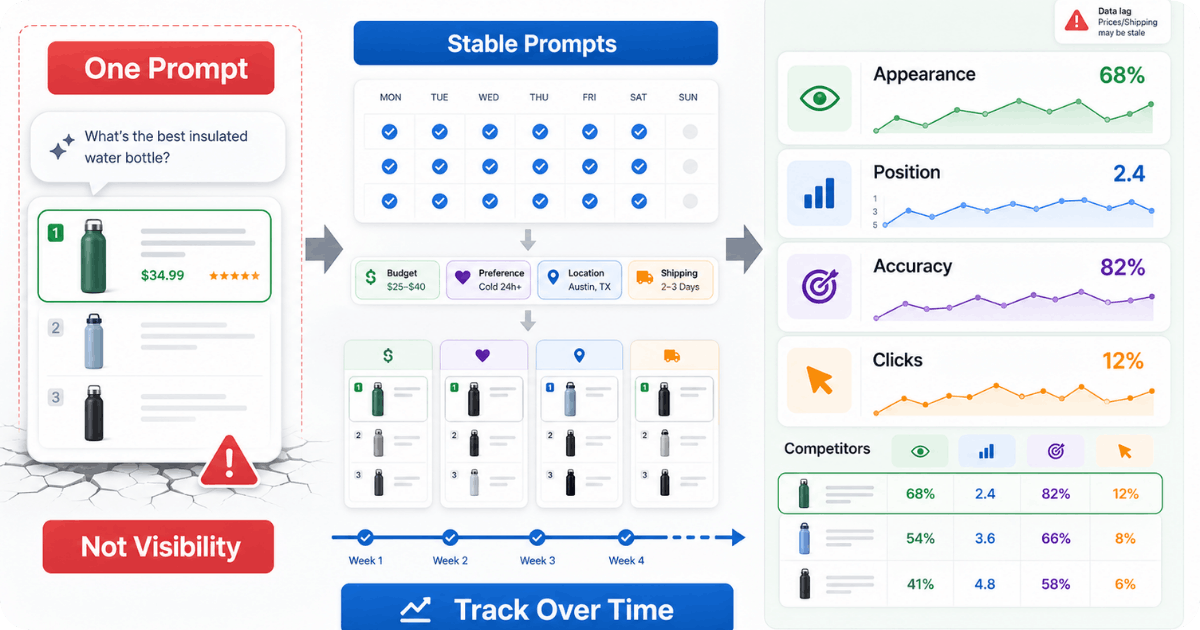
A clean Citeler workflow is simple. Run a baseline scan. Publish or update visible proof. Retest the same prompts. Watch which sources move. Then repeat. That beats guessing which hidden layer a model might read this week.
The takeaway
Paid AI-only content is not automatically useless. But the Perplexity-Time fight shows the cost of being too clever. The closer a tactic gets to invisible persuasion, the more likely answer engines are to block it, downgrade it, or treat it as a trust risk.
If you want durable AI visibility, build public evidence that a person can read and a model can verify. Start with a Citeler free business scan, find where your brand is missing or misread, and strengthen the visible sources that support the answer you want AI systems to give.
FAQs
What is paid AI-only content?
Paid AI-only content is sponsored or brand-approved material created mainly for AI crawlers or agents to read. It may sit in markdown, feeds, structured pages, or other machine-readable layers rather than being presented as normal visible page content.
Is markdown bad for AI visibility?
No. Markdown can make content easier for AI systems to parse. The risk starts when the markdown version contains different claims, paid messages, or disclosures that human readers cannot inspect in the same way.
How should brands improve AI visibility without trust risk?
Publish clear public facts, keep machine-readable and human-readable content aligned, support claims with independent evidence, and measure how each AI system mentions, cites, and frames the brand over time.